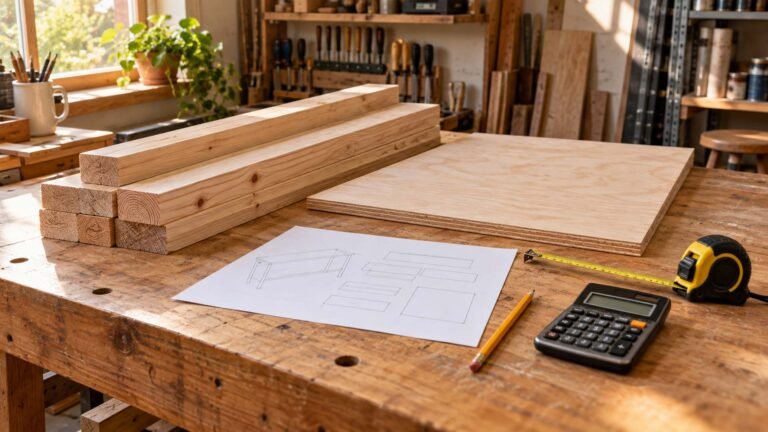
Mobile vs Stationary Woodworking Tools: Small-Shop Guide
Choosing between mobile vs. stationary woodworking tools is not simply a question of buying smaller machines. It is a workshop-planning decision that affects safety, accuracy, storage, dust control, and the number of operations you can complete without fighting the room.
In a large shop, a table saw, jointer, planer, drill press, and assembly table can each have a permanent home. In a one-car garage, basement corner, or compact shed, that same arrangement may leave no clear path for carrying lumber or assembling a cabinet. Mobility can make the room adaptable, but too much movement can also create setup work, unstable machines, and alignment problems.
The best answer is usually a deliberate mix. Some tools earn permanent stations because they need reliable alignment or frequent access. Others work better on locking bases, folding stands, or shared surfaces. This guide explains how to compare the options, which tools benefit most from mobility, and how to build a practical hybrid layout without buying every machine twice.
Mobile vs. Stationary Woodworking Tools: What the Terms Really Mean
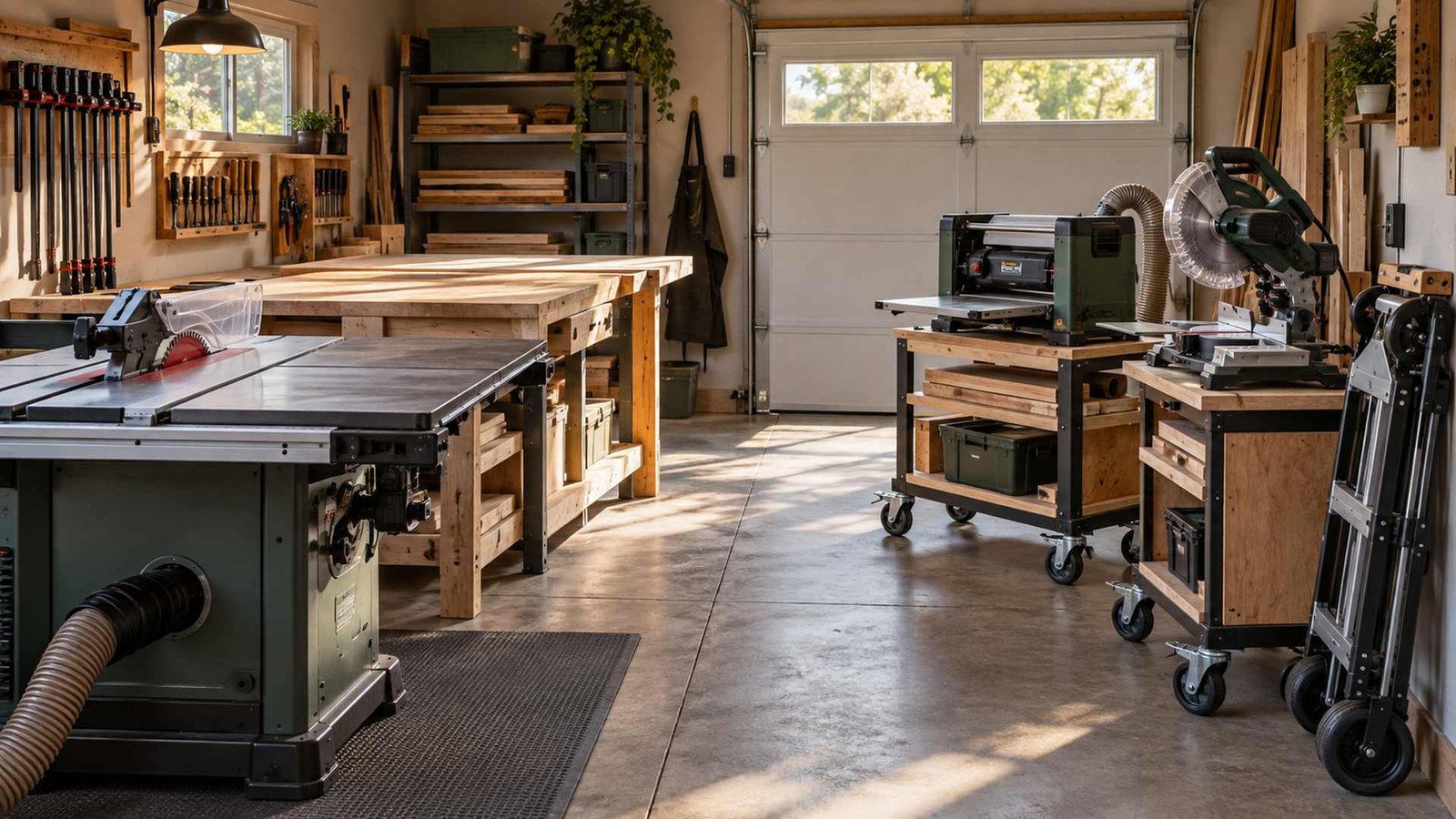
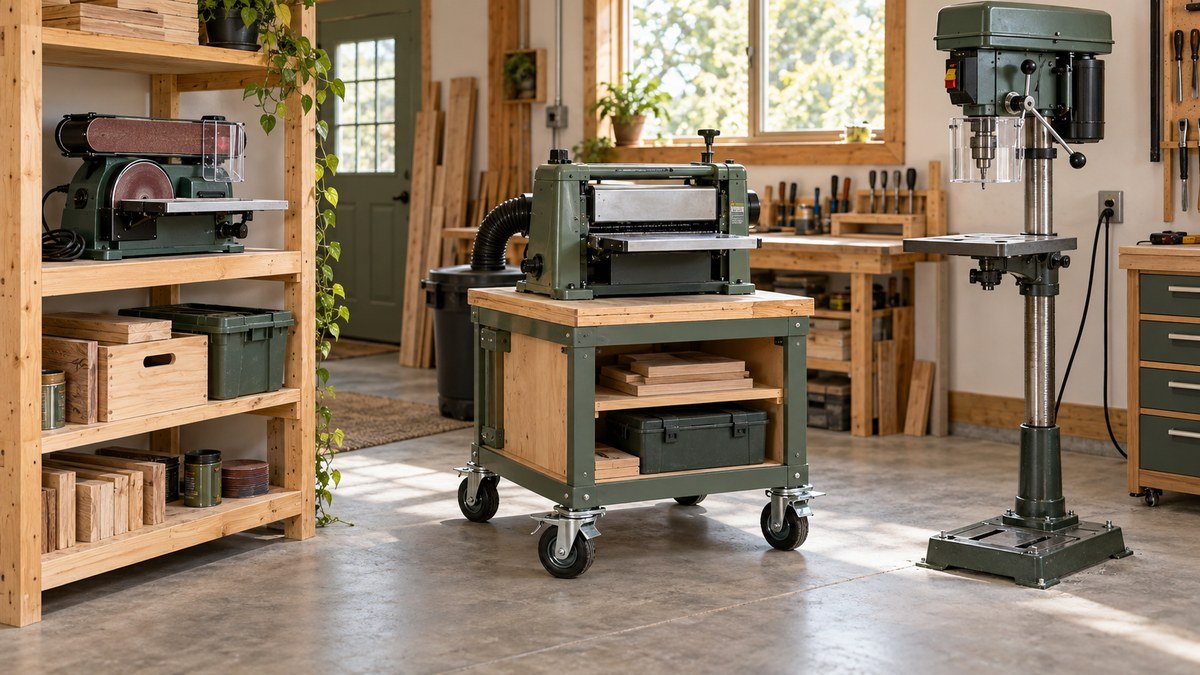
In discussions of mobile vs. stationary woodworking tools, “mobile” can describe several different arrangements. A benchtop tool may be light enough to lift onto a shelf. A contractor saw may remain assembled but roll on a purpose-built base. A planer may live on a flip-top cart, while a miter saw folds against a wall. These are all mobile solutions, yet they impose very different lifting, storage, and setup demands.
A stationary tool is not necessarily a massive industrial machine. It is any tool whose location, infeed path, outfeed support, dust connection, and electrical access are planned as a permanent workstation. Even a compact benchtop drill press can function as a stationary tool when it stays bolted to one cabinet.
When you compare mobile vs. stationary woodworking tools, the distinction matters because every movement has a cost. You may need to clear the floor, unlock wheels, rotate a cart, reconnect dust collection, level the machine, and return it after the cut. One setup is minor; repeating it six times during a project can consume time and attention. Conversely, giving every tool a fixed station can waste valuable floor area when some tools run for only a few minutes each month.
Think in terms of three mobility levels:
- Hand-carried tools: compact machines stored on shelves and lifted onto a sturdy surface.
- Rolling stations: heavier tools mounted on stable carts or rated mobile bases with locking wheels.
- Fixed stations: tools anchored in a dedicated location with permanent support and utilities.
This spectrum is more useful than a simple portable-or-stationary label. It lets you assign each machine a home based on weight, frequency, precision, and the available room.
Start With Space, Workflow, and Workpiece Size
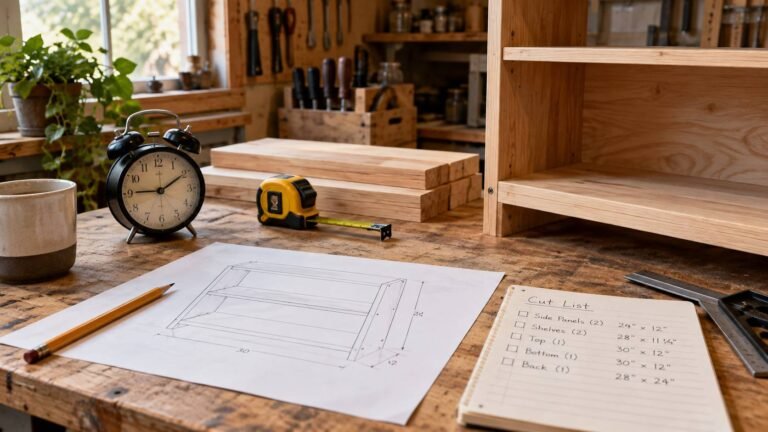
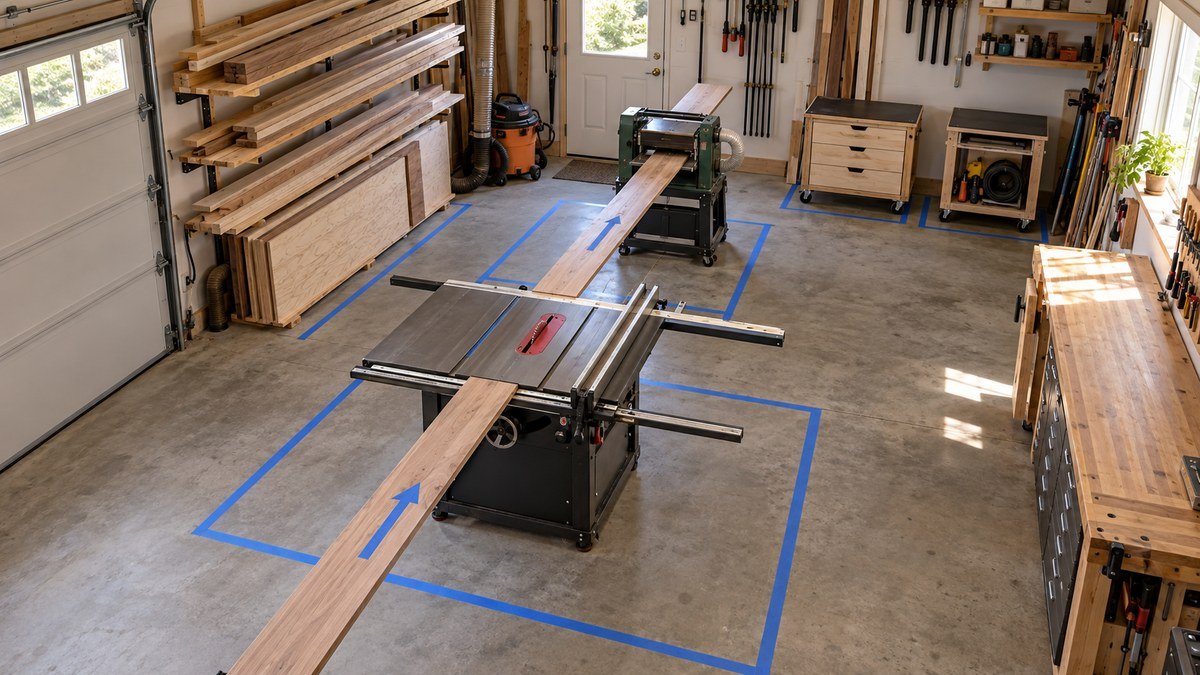
Before comparing machines, map how material moves through the room. A thoughtful small woodworking shop setup begins with clear paths, not a shopping list. Mark the doors, stairs, electrical outlets, windows, low ceilings, and anything that cannot move. Then sketch the longest boards and widest sheet goods you expect to handle.
For mobile vs. stationary woodworking tools, the empty space around a machine is often more important than the machine footprint itself. A compact table saw still needs infeed and outfeed clearance. A drill press requires less floor area but needs room above and beside the table. A planer may be small when stored, yet processing an eight-foot board creates a long temporary work zone.
Use painter’s tape on the floor to test footprints when planning mobile vs. stationary woodworking tools. Include the operator’s stance and a safe path around the machine. If two stations need the same aisle, decide whether they will ever operate at the same time. Shared clearance can be efficient when only one machine occupies it during use.
An 8×8 woodworking shop layout illustrates why zoning matters. Put storage near the entrance, rough milling near lumber storage, and assembly where you can temporarily claim the largest open area. Position frequently used tools so that using one does not require moving three others.
Consider Workpiece Size
Also consider workpiece size, not merely shop size. A model builder can keep many machines fixed in a compact room because the stock is short. A furniture maker working in the same room may need rolling stations so long boards can pass through an open doorway. The correct decision follows the project, not a universal floor-plan rule.
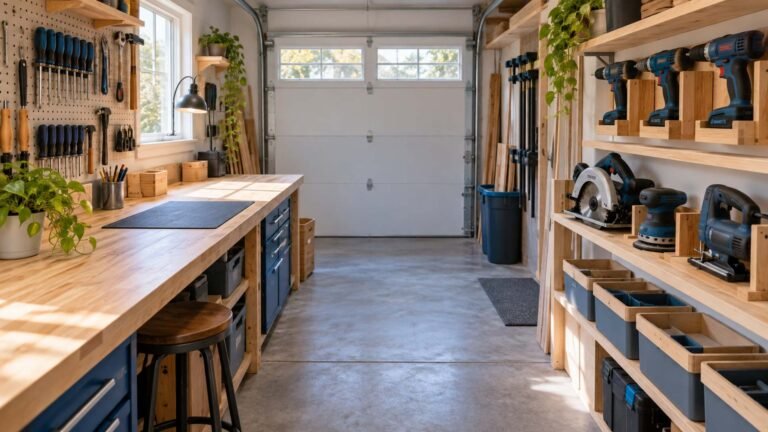
Finally, reserve a parking location for every mobile station. A cart that rolls freely but has no assigned storage bay becomes an obstacle. Vertical storage, wall cabinets, and under-bench zones can recover floor area; these small workshop storage ideas can help you plan those parking spaces before you build carts.
Compare Cost, Capacity, Accuracy, and Setup Time
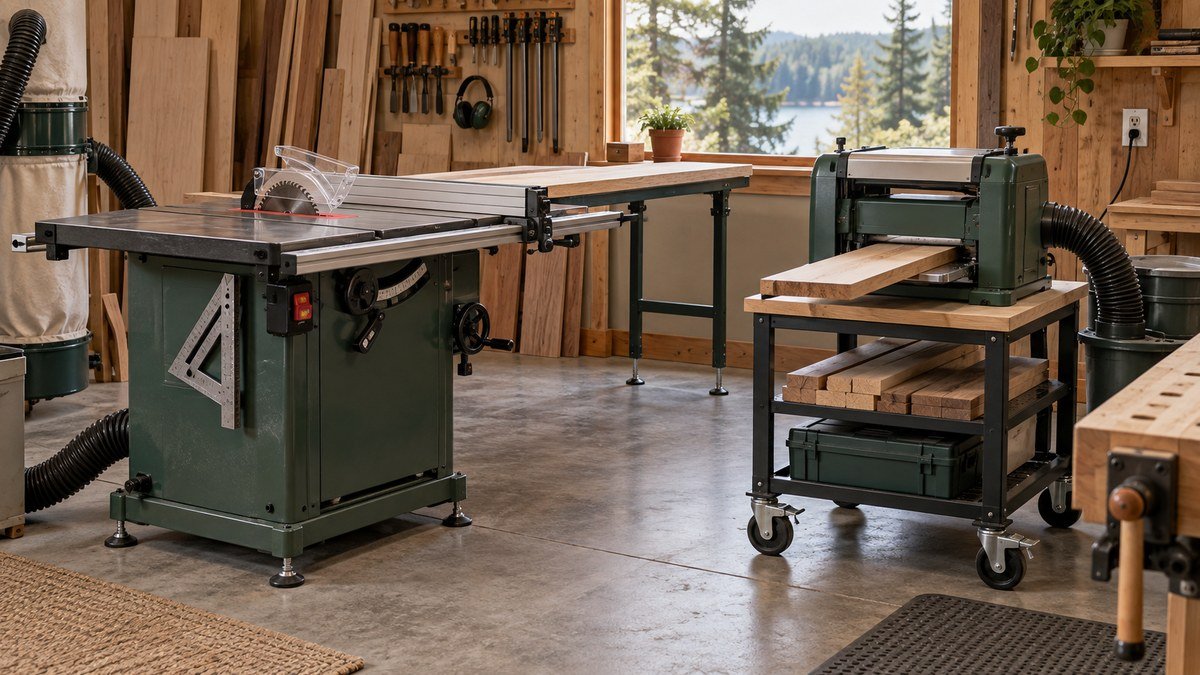
The real comparison between mobile vs. stationary woodworking tools involves more than purchase price. Evaluate total cost, working capacity, repeatability, setup time, service access, and the likelihood that you will actually use the tool.
Total cost
A portable machine may appear cheaper, but add the stand, cart materials, locking hardware, outfeed support, dust fittings, and storage. A stationary machine may cost more upfront yet include a stable base and larger table. Compare complete working systems rather than bare-tool prices.
Capacity and power
Stationary machines often provide larger motors, longer beds, and greater cutting capacity. Those advantages matter when flattening heavy hardwood, ripping thick stock, or running long production sessions. A smaller tool can still be the better choice when your work is light, your electrical supply is limited, or the full-size machine would prevent other tasks.
Accuracy and repeatability
Weight and rigidity help a machine resist vibration and remain aligned. A fixed fence, level table, and permanent outfeed surface make repeated cuts easier. Mobile equipment can also be accurate, but the base must lock firmly and the setup must return to the same reference points. Leveling feet or positive stops can be more important than premium casters.
Setup and reset time
Track how long a tool takes to deploy. Five minutes seems small until every cut requires moving a vehicle, shifting lumber, finding a cord, attaching a hose, and leveling a stand. If setup discourages use, the machine is not saving space effectively.
Flexibility and future changes
Your projects may change. A mobile layout makes experimentation easier and reduces the cost of revising the room. Fixed stations make sense after you understand your workflow. If you are new to the craft, review a beginner woodworking tool list and add capacity only when a real project demands it.
A simple scorecard can clarify the choice between mobile vs. stationary woodworking tools. Rate each tool from one to five for use frequency, lifting difficulty, alignment sensitivity, dust-connection complexity, workpiece clearance, and value of a permanent outfeed surface. High frequency and high alignment sensitivity favor a fixed station. Infrequent use and shared clearance favor mobility.
Tools That Usually Benefit Most From Mobility
Many small shops work better when selected machines can move, which is why mobile vs. stationary woodworking tools should be evaluated one station at a time. The strongest candidates are tools used intermittently, tools needing temporary long clearances, and stations that can serve more than one purpose.
Planers and benchtop jointers
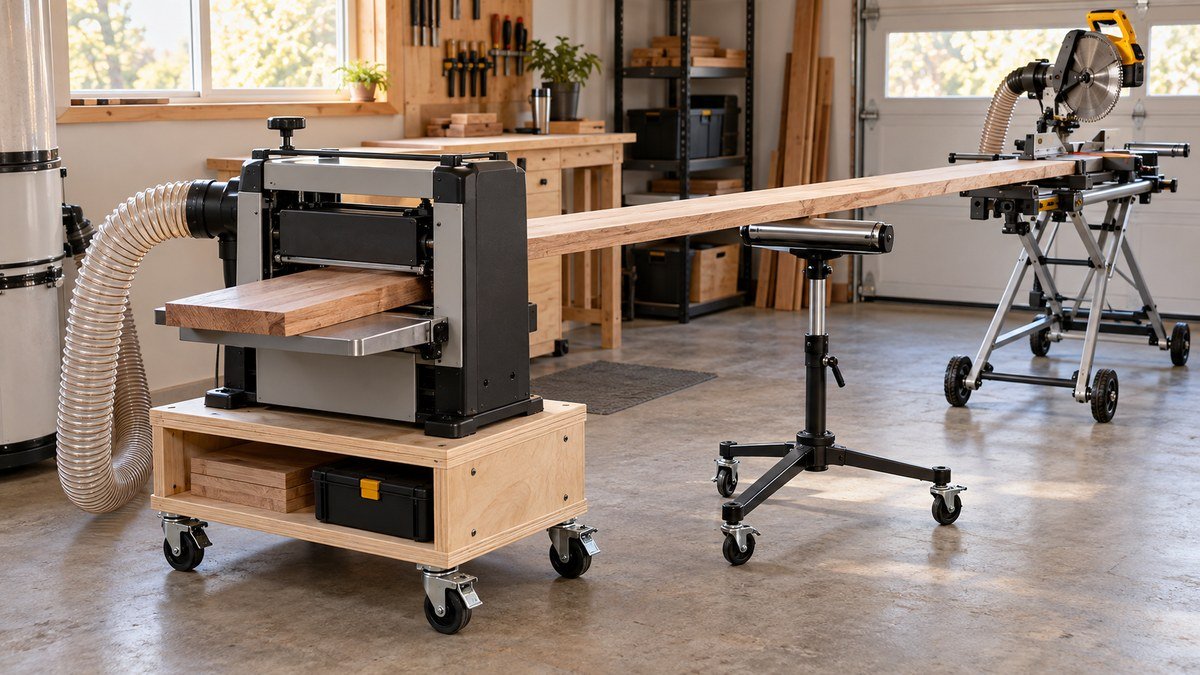
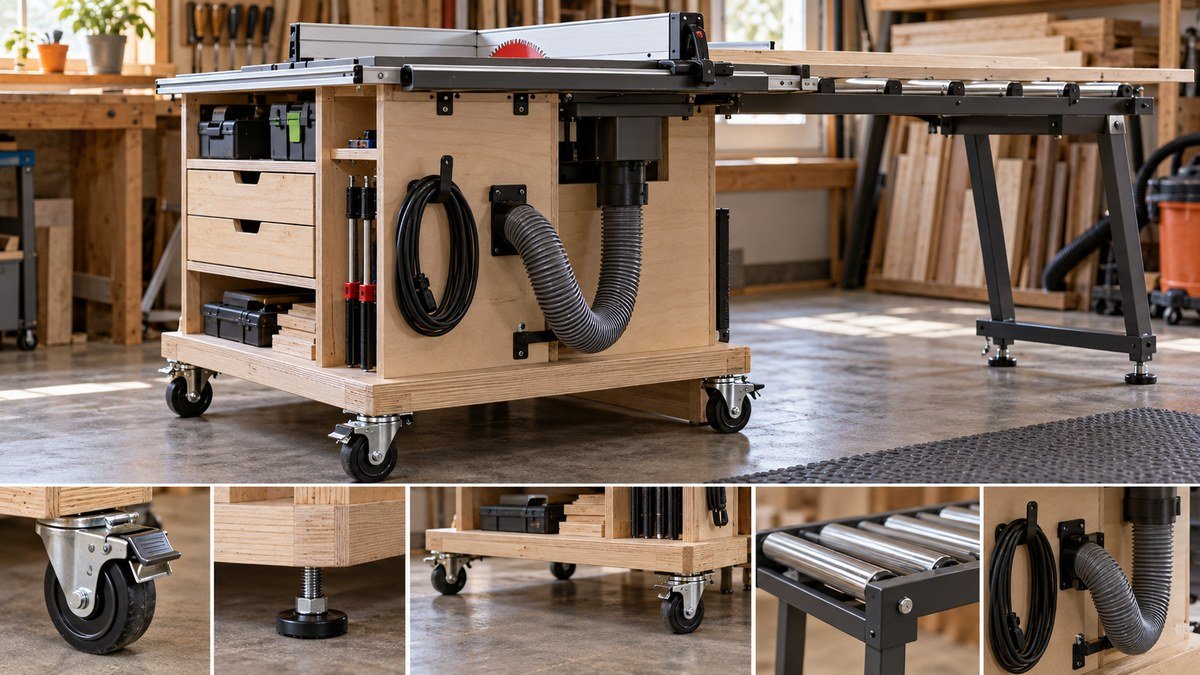
A thickness planer needs straight infeed and outfeed space but does not need to occupy that aisle all day. Mounting it on a low rolling cart can place its bed near the height of another bench, allowing that surface to help support stock. Keep the cart wide enough to resist tipping and lock it before feeding material.
Miter saws
A miter saw needs substantial left and right support for long trim. In a tiny shop, a folding stand or rolling cabinet can be more efficient than a long dedicated bench. Repeatable stops can preserve accuracy when the station is deployed.
Affiliate note: This section contains affiliate links.
For extra support at a saw or planer, an adjustable roller support stand can help manage long workpieces when it is adjusted to the machine’s bed height and placed on a level floor. Treat it as support, not as a substitute for controlling the stock with both hands.
Assembly and finishing surfaces
Folding tables and mobile assembly benches let you reclaim open floor area. They are valuable when you build occasional furniture but do not need a large table every day. A portable folding woodworking bench can add temporary support, but verify the stated load capacity, locking mechanism, and surface flatness before relying on it for cutting or clamping.
Dust collection accessories
Mobility also applies to utilities. A compact extractor or shop vacuum can serve several tools if the hose reaches each station without crossing the operator’s path. A clear dust-collection hose may be useful for a mobile setup because blockages are easier to spot, but confirm the diameter, wall thickness, static-control requirements, and compatibility with your ports before ordering.
This is where mobile vs. stationary woodworking tools becomes a system question. A rolling planer is not truly convenient if its dust hose, cord, and outfeed stand are stored in three separate locations. Keep the accessories together, label adapters, and use a short deployment checklist.
When a Stationary Machine Is the Better Choice
Some machines reward a permanent home, so a balanced comparison of mobile vs. stationary woodworking tools must account for more than saved floor space. The deciding factor is not prestige; it is whether a fixed position creates safer, faster, and more repeatable work.
Table saws with surrounding support
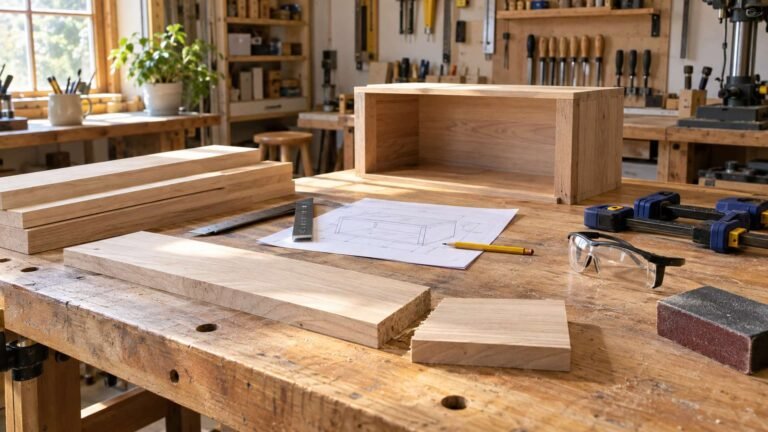
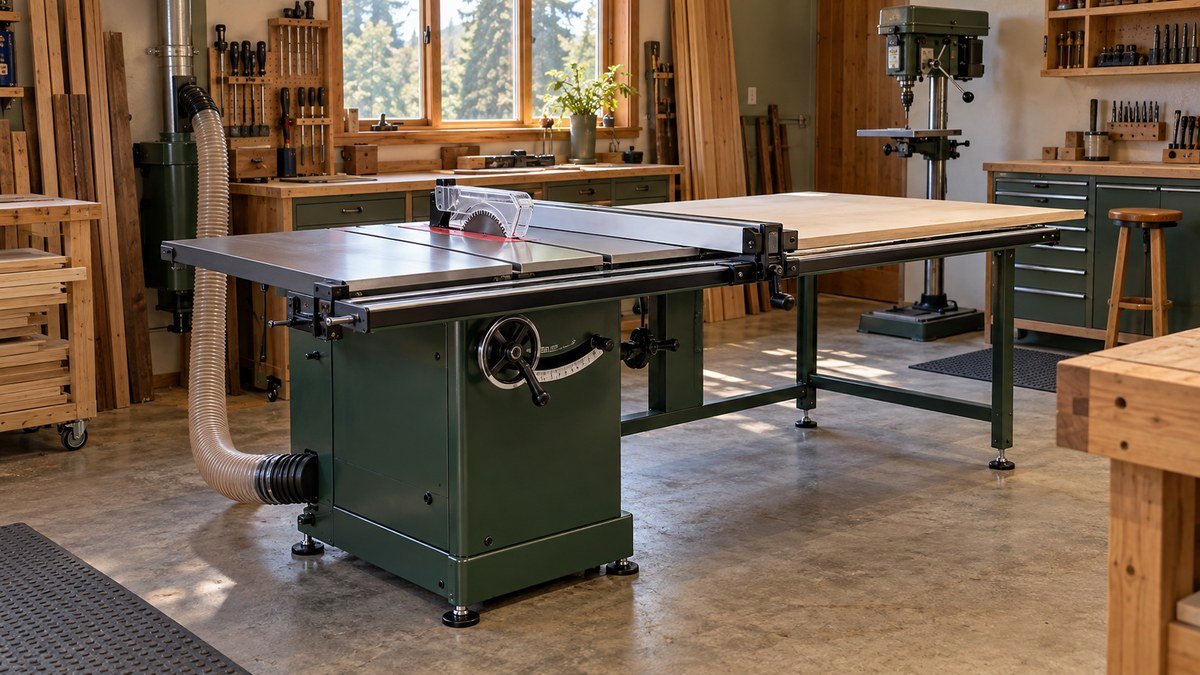
A table saw often becomes the center of a shop because its outfeed table can double as an assembly surface. A fixed location allows carefully aligned support, predictable dust routing, and a clear approach to the blade. If you use the saw frequently and process large sheets, moving it for every operation may add more friction than flexibility.
Full-size jointers
Long jointer beds improve the control of longer boards. The machine’s weight and alignment make frequent movement undesirable. A mobile base can still be installed for rare layout changes, but the jointer should sit firmly on level supports during use.
Drill presses and bandsaws
Tall machines have a higher center of gravity. Moving them over thresholds or uneven floors can be risky, and narrow mobile bases may reduce stability. A fixed position is preferable when the tool is used regularly or when the floor is imperfect. If you do add wheels, follow the machine manufacturer’s mounting guidance and ensure the base is rated for the total load.
Precision stations
Router tables, sharpening stations, and repeat-cut setups benefit from leaving fences, stops, and dust connections in place. The time saved by a permanent station can outweigh the floor area it occupies, especially when the station includes useful storage.
When considering mobile vs. stationary woodworking tools, never trade stability for convenience. A tool should not rock, roll, or twist under normal cutting forces. Locking wheels are helpful, but wheel brakes alone may not remove all movement. Leveling feet that lift the wheels off the floor can provide a more solid working stance.
A set of dual-locking caster wheels may suit a shop-built cart when the wheel diameter and load rating match the finished station. Calculate the combined weight of the machine, cabinet, stored accessories, and workpiece, then include a safety margin. Inspect fasteners regularly and avoid treating general-purpose casters as a universal machine base.
Build a Hybrid Small-Shop Tool Strategy
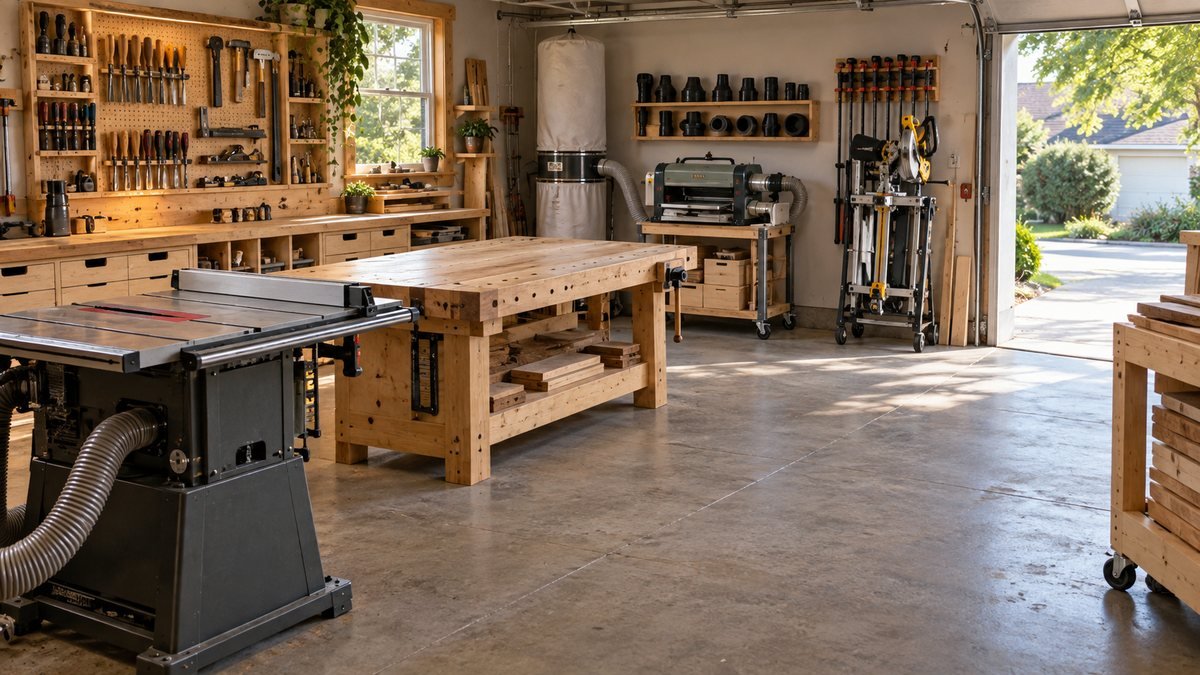
The most practical answer to mobile vs. stationary woodworking tools is often a hybrid plan. Keep the tools that establish your main reference surfaces fixed, then make occasional-use machines easy to deploy around them.
Start with one stable workbench and one primary cutting station when organizing mobile vs. stationary woodworking tools. Arrange them so the bench can provide outfeed support without obstructing the operator. Place hand tools, measuring tools, and common accessories within reach. Give the drill press, sharpening station, or router table a permanent location only if it earns that space through frequent use.
Next, group mobile machines by workflow. A milling cart may store a planer with its adapters and support stand. A sanding cart may hold abrasives and dust fittings. A fold-down assembly surface can store clamps nearby. This reduces the number of separate setup steps.
Use these rules when designing a rolling station:
- Keep the footprint wider than the top-heavy machine whenever practical.
- Select hardware for the total loaded weight, not the empty cart.
- Lock or level the base before switching on the tool.
- Route cords and hoses away from feet, wheels, blades, and hot surfaces.
- Provide a repeatable storage position for fences, guards, push devices, and adapters.
- Test the station with the machine unplugged before making the first cut.
Plan Power and Dust Connections
Plan electrical and dust connections as part of the layout. Avoid daisy-chained extension cords, and follow the tool manufacturer’s requirements for circuit capacity and cord gauge. Use blast gates, quick-connect fittings, or labeled adapters only when they are compatible with the system. Dust control should be ready before the machine is ready.
Revisit the layout after three projects; real use is the best test of mobile vs. stationary woodworking tools. Note which stations moved often, which stayed parked, and where stock repeatedly collided with walls or other machines. A tool that never leaves its parking spot may deserve a fixed station. A fixed tool that blocks every assembly may need a mobile base.
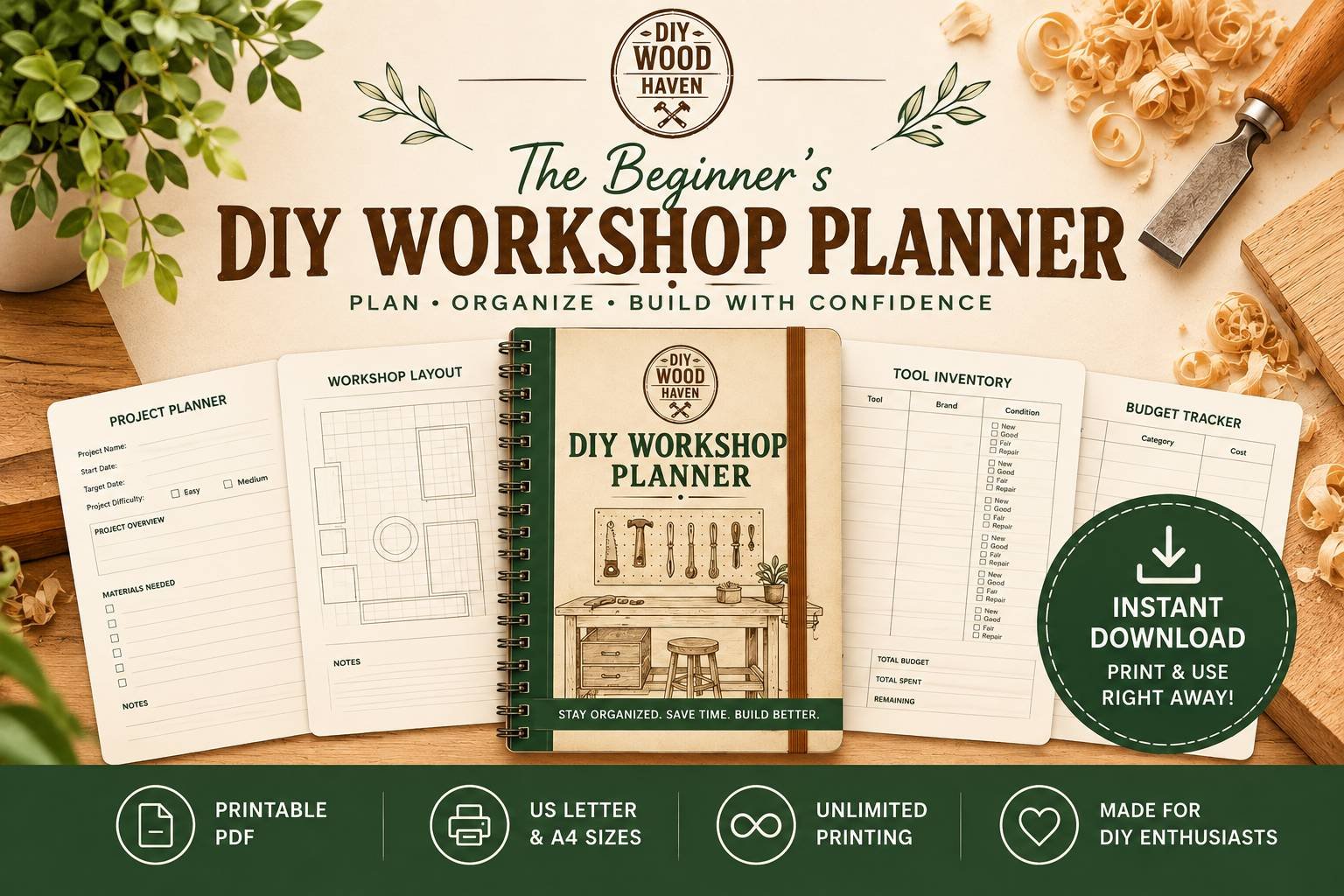
The Ultimate Small Shop review can help you evaluate broader layout claims, while the Beginner’s DIY Workshop Planner offers a structured way to map zones and priorities. For a quick project-planning aid before rearranging the room, download the Free Weekend DIY Project Checklist. It is a free resource, not a product recommendation.
With a hybrid strategy, mobile vs. stationary woodworking tools stops being an either-or debate. Every tool receives the amount of permanence it deserves, and the room remains adaptable without becoming chaotic.
Frequently Asked Questions
Are mobile tools less accurate than stationary tools?
Not automatically. Accuracy depends on the machine, base rigidity, alignment, work support, and setup. A quality portable tool on a stable, level stand can be accurate. A heavy stationary machine can still cut poorly when its fence or table is misaligned. The difference is that a fixed setup usually makes repeatability easier because fewer reference points change between sessions.
Which woodworking tools should be mobile in a one-car garage?
Planers, miter saws, spindle sanders, compact dust extractors, and assembly tables are common mobile candidates. The ideal list depends on your projects and how often you must return the garage to another use. In planning mobile vs. stationary woodworking tools, prioritize machines that need temporary clearance but spend most of their time idle.
Can I put every machine on wheels?
You can add mobility to many machines, but that does not make it wise for every tool. Tall, top-heavy, vibration-sensitive, or frequently used machines may be safer and more convenient on fixed supports. Confirm manufacturer guidance, load capacity, fastener strength, wheel diameter, and floor condition. A mobile base must become stable before operation.
Do locking casters make a tool as stable as a fixed base?
Not always. Some caster brakes stop wheel rotation but allow the swivel to move. Dual-locking casters reduce both motions, yet flexible wheels and uneven floors can still permit rocking. For precision machines, consider retractable casters or leveling feet that transfer the load from the wheels to solid pads.
How do I decide whether setup time is acceptable?
Time your complete routine: clear the area, move the station, lock and level it, connect power and dust collection, arrange supports, verify alignment, and restore it afterward. If the process takes longer than the operation or makes you avoid the tool, revise the station. Good mobility removes steps rather than merely adding wheels.
Should beginners buy portable tools first?
Portable tools can preserve flexibility while you learn what your projects require. However, buying a smaller machine only because it is easier to store can lead to an early replacement if it lacks capacity. Compare mobile vs. stationary woodworking tools by actual workpiece size, expected frequency, available power, and the value of repeatable setup.

Conclusion
There is no universal winner in mobile vs. stationary woodworking tools. A successful small shop gives permanent space to the machines that need alignment, stability, and frequent access, while placing occasional-use tools on safe, organized mobile or folding stations.
Begin with the room and the material path. Measure clearances, include support surfaces, and give every rolling station a parking space. Compare the complete system cost and setup time, not only the machine price. Above all, make stability non-negotiable: wheels, carts, and stands must be properly rated, locked, and tested before use.
The best small workshop is not the one with the most machines. It is the one in which each tool can be used safely without unnecessary lifting, repeated rearrangement, or blocked work paths. A deliberate hybrid layout lets a compact room change with the project while preserving the reliable stations that make accurate work easier.
Affiliate Disclosure
Affiliate Disclosure: This post contains affiliate links. If you purchase through these links, DIY Wood Haven may earn a commission at no additional cost to you.




Ready to Build Smarter?