Skip to content
diywoodhaven

diywoodhaven

  • Home
  • ArticlesExpand
    • Beginner Guides
    • DIY Projects
    • Furniture Restoration
    • Tools & Reviews
  • Free Resources
  • ShopExpand
    • SERIES 01 — Woodworking Project Planner
    • The Beginner’s DIY Workshop Planner
  • Login
  • Register
diywoodhaven
diywoodhaven
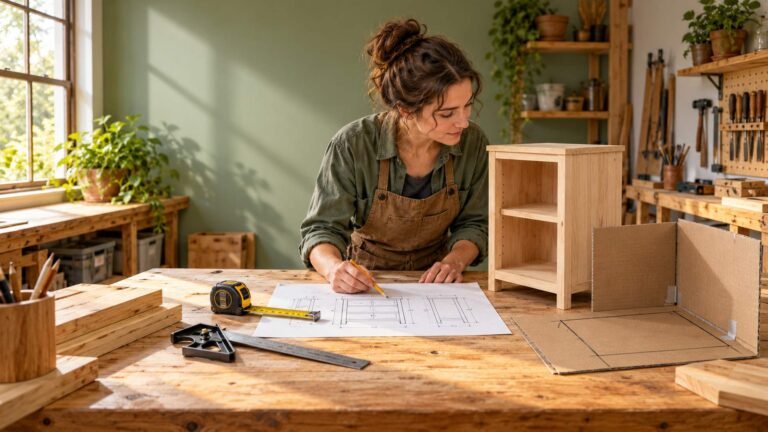
  • Woodworker revising furniture plans beside a compact cabinet mockup in a bright home workshop.

    How to Modify Woodworking Plans to Fit Your Space

    A promising project plan can become frustrating the moment its dimensions meet your actual room. The cabinet is too deep for the hallway, the bench blocks a door, or the desk leaves no space for a chair. Learning how to modify woodworking plans turns that mismatch into a manageable design problem. The goal is not simply to shrink every number. It is to preserve strength, useful proportions, joinery, and comfort while changing the dimensions that truly need to move.
    Read More How to Modify Woodworking Plans to Fit Your SpaceContinue

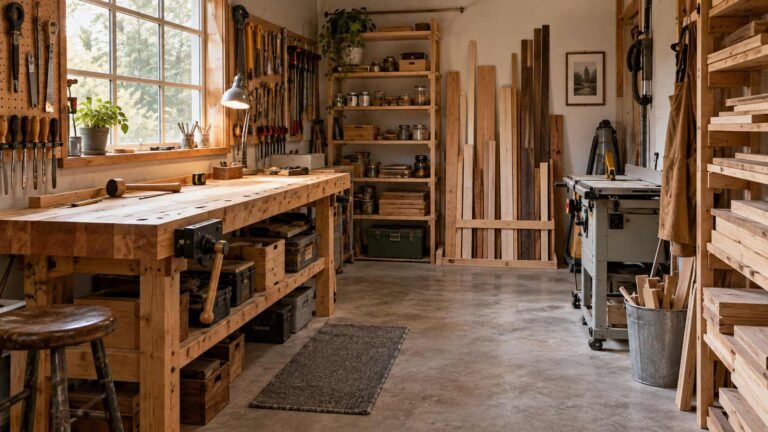
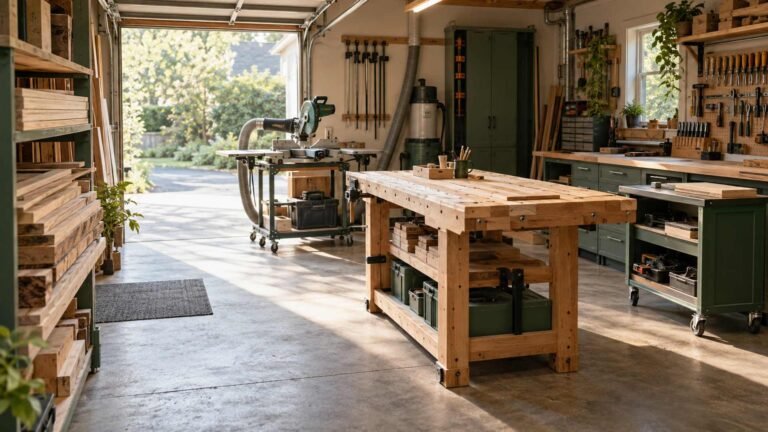
  • Small garage woodworking shop with lumber storage, cutting station, central workbench, mobile cart, and clear walking paths.

    Woodworking Shop Workflow for Small Spaces

    A good woodworking shop workflow helps you move from rough lumber to finished project without repeatedly shifting tools, stepping over cords, or carrying parts back across the room. In a small workshop, that matters even more because every bench, cart, and storage rack competes for the same limited floor area.

    Read More Woodworking Shop Workflow for Small SpacesContinue

  • Organized compact woodworking shop with even ceiling lighting, focused task lamps, a clear workbench, and an open central aisle.

    Small Workshop Lighting Planning Guide

    Good small workshop lighting makes layout lines easier to see, helps reveal sanding scratches, and reduces the strain of working in dim corners. A shop can have bright fixtures and still perform poorly if your body casts a shadow over the bench, a bare lamp creates glare, or a machine blocks the light exactly where a cut must be watched.

    Read More Small Workshop Lighting Planning GuideContinue

  • Compact woodworking workshop with a sturdy wall-side workbench, organized hand tools, lumber storage, and a clear central walkway.

    Small Workshop Workbench Placement Guide

    Learning how to organize power tools is one of the fastest ways to make a small workshop safer and easier to use. When drills, sanders, saws, batteries, cords, and accessories compete for the same shelf, even a simple project begins with a search. Tools get stacked where they can fall, batteries remain on chargers, and the workbench becomes a permanent parking area instead of a place to build.

    Read More Small Workshop Workbench Placement GuideContinue

  • Craftsperson reviews a floor plan in a compact garage woodshop with organized wall outlets and dust collection.

    Woodworking Shop Electrical Outlets: Planning Guide

    Woodworking shop electrical outlets should be planned around your actual tools, work zones, lighting, dust collection, and future needs—not simply around how many receptacles fit on each wall. A shop can have a large outlet count and still be frustrating—or unsafe—if receptacles are in the wrong places or share an overloaded circuit. The goal is to create a practical layout without making extension cords part of the permanent setup.

    Read More Woodworking Shop Electrical Outlets: Planning GuideContinue

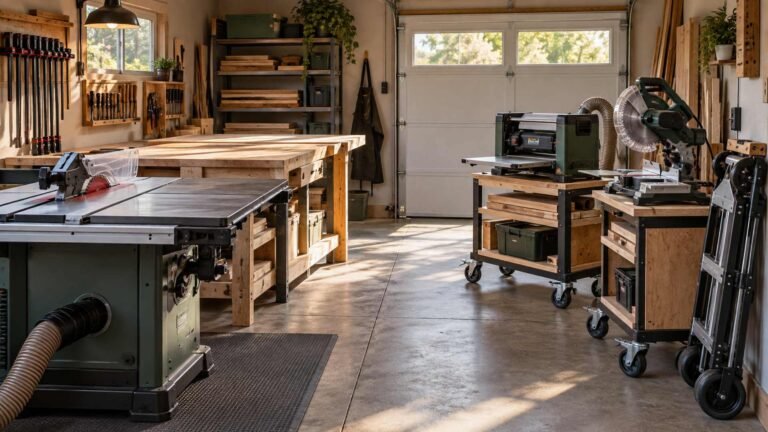
  • A compact woodworking shop with a fixed table saw and workbench on the left and mobile planer and miter saw carts on the right.

    Mobile vs Stationary Woodworking Tools: Small-Shop Guide

    Choosing between mobile vs. stationary woodworking tools is not simply a question of buying smaller machines. It is a workshop-planning decision that affects safety, accuracy, storage, dust control, and the number of operations you can complete without fighting the room.

    Read More Mobile vs Stationary Woodworking Tools: Small-Shop GuideContinue

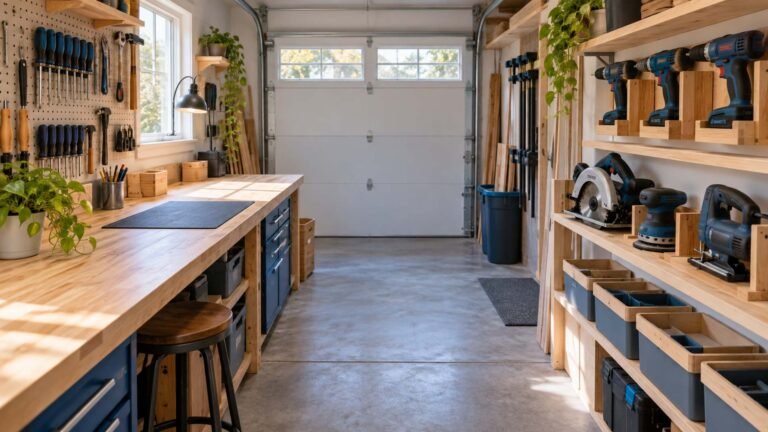
  • Organized compact woodworking shop with cordless drills, saws, and sanders stored on wall racks beside a clear workbench and open walkway.

    How to Organize Power Tools in a Small Workshop

    Learning how to organize power tools is one of the fastest ways to make a small workshop safer and easier to use. When drills, sanders, saws, batteries, cords, and accessories compete for the same shelf, even a simple project begins with a search. Tools get stacked where they can fall, batteries remain on chargers, and the workbench becomes a permanent parking area instead of a place to build.

    Read More How to Organize Power Tools in a Small WorkshopContinue

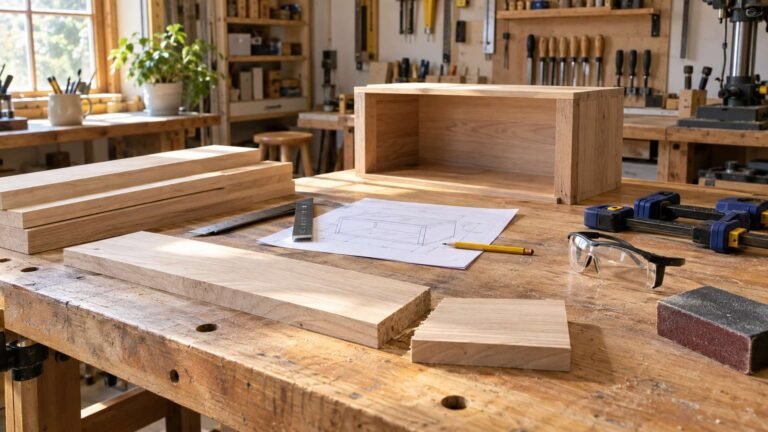
  • Organized woodworking bench with a project plan, lumber, measuring tools, clamps, safety glasses, sanding block, and a completed cabinet.

    Beginner Woodworking Mistakes: 7 Costly Errors to Avoid

    Open with the frustration of wasting a board or rebuilding a part because of a preventable decision. Introduce beginner woodworking mistakes naturally and promise seven practical corrections covering planning, material preparation, measuring, cutting, assembly, safety, and finishing.

    Read More Beginner Woodworking Mistakes: 7 Costly Errors to AvoidContinue

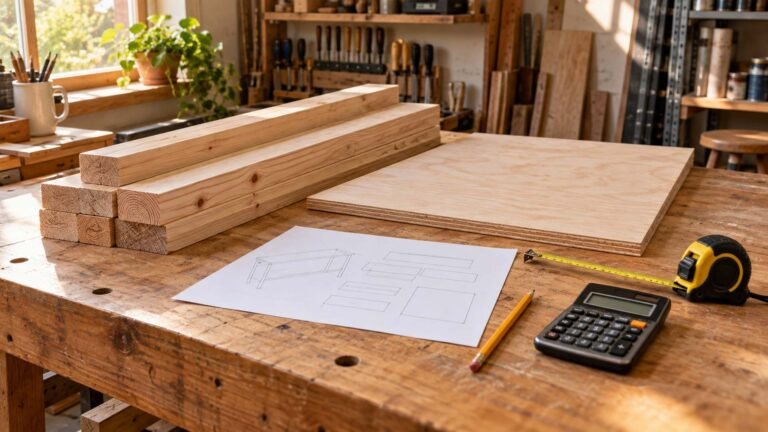
  • Lumber boards, plywood, a tape measure, pencil, calculator, and cut sketch arranged on a warm workshop bench.

    How Much Wood Do I Need for a Woodworking Project?

    If you have ever stood in a lumber aisle wondering, “How much wood do I need?”, you are not alone. Material estimates can feel harder than the build itself because project plans describe finished parts, while stores sell boards and sheets in standard sizes. Lumber may also contain knots, checks, or warped areas that you cannot use.

    Read More How Much Wood Do I Need for a Woodworking Project?Continue

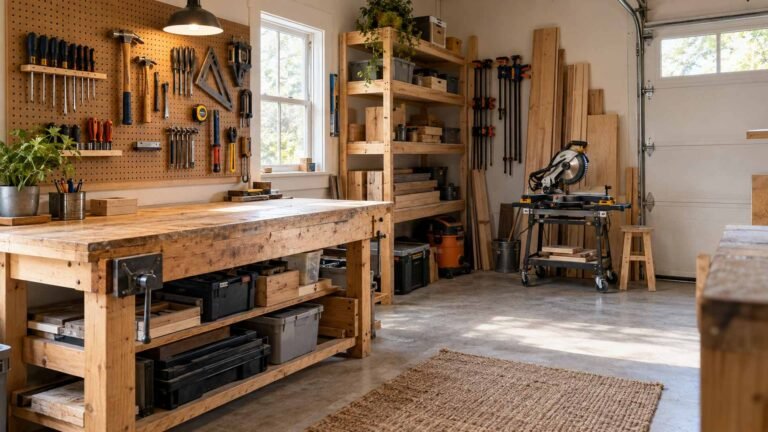
  • Organized compact woodworking workshop with a large workbench, wall-mounted tools, lumber storage, and a mobile miter saw.

    Ultimate Small Shop Review: Is $1,000 Realistic?

    The promise behind Ultimate Small Shop is easy to understand: build a useful woodworking shop in very little space without spending more than $1,000. For a beginner facing a crowded garage, a limited tool budget, and dozens of conflicting recommendations, that sounds appealing. This Ultimate Small Shop review looks at the program as a planning resource—not as a physical tool package—and asks the question that matters most: can its central budget idea work in the real world?

    Read More Ultimate Small Shop Review: Is $1,000 Realistic?Continue

Page navigation

1 2 3 Next PageNext

Social

Facebook X Instagram TikTok YouTube Pinterest Email Threads

About

  • About
  • Privacy Policy
  • Terms & Conditions
  • Affiliate Disclosure
  • Refund Policy
About
Privacy Policy
Terms & Conditions
Affiliate Disclosure
Refund Policy

Articles

  • Beginner Guides
  • DIY Projects
  • Furniture Restoration
  • Tools & Reviews

Other

  • Shop
  • Free Resources

© 2026 diywoodhaven. All Rights Reserved.

Scroll to top
  • Home
  • Articles
    • Beginner Guides
    • DIY Projects
    • Furniture Restoration
    • Tools & Reviews
  • Free Resources
  • Shop
    • SERIES 01 — Woodworking Project Planner
    • The Beginner’s DIY Workshop Planner
  • Login
  • Register