How to Price Handmade Wood Furniture for Profit
Learning how to price handmade wood furniture starts with one simple idea: your selling price must pay for the entire job, not just the boards you bought. Lumber is easy to notice, but finishing supplies, wasted material, design time, tool wear, selling fees, delivery, and customer communication can quietly consume what looked like a healthy profit.
A reliable price is neither a guess nor a copy of someone else’s listing. It is a documented estimate built from your real costs, a fair labor rate, an overhead allowance, and a deliberate profit target. Market research then helps you decide whether the design, quality, and customer experience support that number.
This guide explains a beginner-friendly woodworking pricing formula and shows how to turn it into a repeatable quote. You will learn what to count, how to value your time, how markup differs from margin, and how to review each finished project so your next estimate becomes more accurate.
Start With the True Cost of Materials
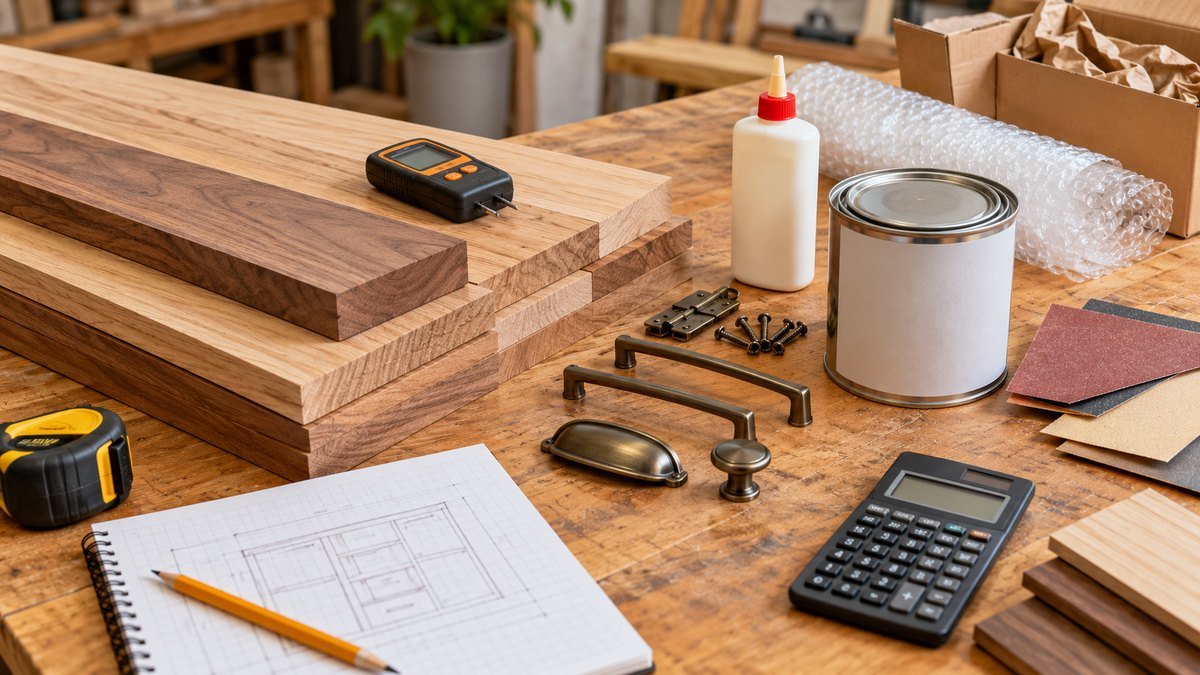
When beginners ask how to price handmade wood furniture, they often begin with the receipt from the lumberyard. That is useful, but it is only the beginning. Your material total should include every item consumed or committed to the build: lumber, sheet goods, hardware, glue, abrasives, finish, applicators, fasteners, packaging, and any job-specific delivery materials.
Count usable lumber, waste, and leftovers
Base the estimate on the quantity you must purchase, not only the wood visible in the finished piece. A board may contain knots, checks, severe warp, or grain that cannot be used in a prominent location. Milling also reduces width and thickness. Add a sensible waste allowance that reflects the material, the cut list, and your confidence in the plan rather than using the same percentage for every project.
If you are still planning quantities, the guide on how much wood you need for a woodworking project can help you connect the cut list to the purchase list. Material choice also affects price and customer expectations, so review the best types of wood for furniture before promising a species or finish.
Wood condition matters as much as quantity. Material that is too wet for an indoor furniture build can move after assembly and create costly callbacks. A compact wood moisture meter may help you screen boards before assigning them to a project.
Affiliate note: This section contains affiliate links.
Include small supplies that are easy to overlook
Small consumables become expensive when they disappear from every quote. Estimate the portion of glue, sandpaper, finish, rags, brushes, masking material, and shop towels used for the job. You do not need to measure every drop. A consistent per-project allowance based on past builds is often more practical.
Record current replacement cost rather than relying on an old bargain price. If you already own a slab or hardware set, it still has value. Pricing it at zero makes the present sale look profitable while leaving no money to replace the stock.
Put a Fair Price on Your Labor
Labor is not whatever remains after materials. It is a direct cost that should be estimated before profit is added. A furniture maker performs several roles: designer, buyer, machine operator, assembler, finisher, photographer, salesperson, and delivery coordinator. If the price pays for only the cutting and assembly hours, much of the work becomes unpaid.
Track design, milling, assembly, finishing, and admin time
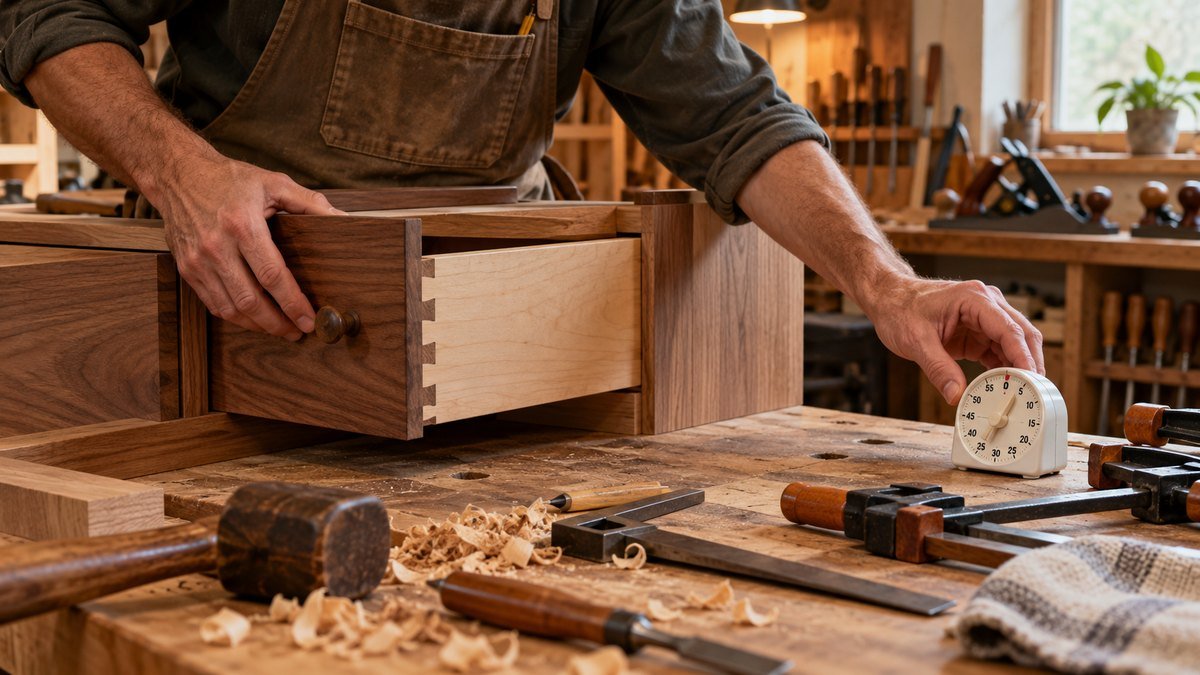
Break the project into stages and estimate each one separately. A basic list might include consultation, drawing, material selection, milling, joinery, dry fitting, assembly, sanding, finishing, curing-related handling, hardware installation, photography, packing, and delivery. Include setup and cleanup when they are specific to the job.
Use actual time records to improve future quotes. A phone timer, spreadsheet, or notebook is enough. Track active work separately from unattended drying time. You generally should not bill eight labor hours because a finish cures overnight, but you should bill the time spent preparing, applying, inspecting, and moving the piece safely.
The woodworking project time estimate guide offers a practical way to divide a build into stages before assigning hours.
Choose a realistic shop rate
Your shop rate is not the same as the hourly wage you would accept as an employee. A self-employed maker must cover unpaid administration, downtime, insurance where applicable, equipment, workspace costs, and business risk. Start with the personal compensation you need, then consider the productive hours you can realistically sell.
For example, you may spend forty hours working in a week but bill only part of that time directly to furniture projects. Quoting with an employee-style wage across billable hours alone can leave no money for the rest of the business. Choose a rate you can explain and review it when costs, skill, demand, or production speed change.
Add Overhead and Selling Expenses
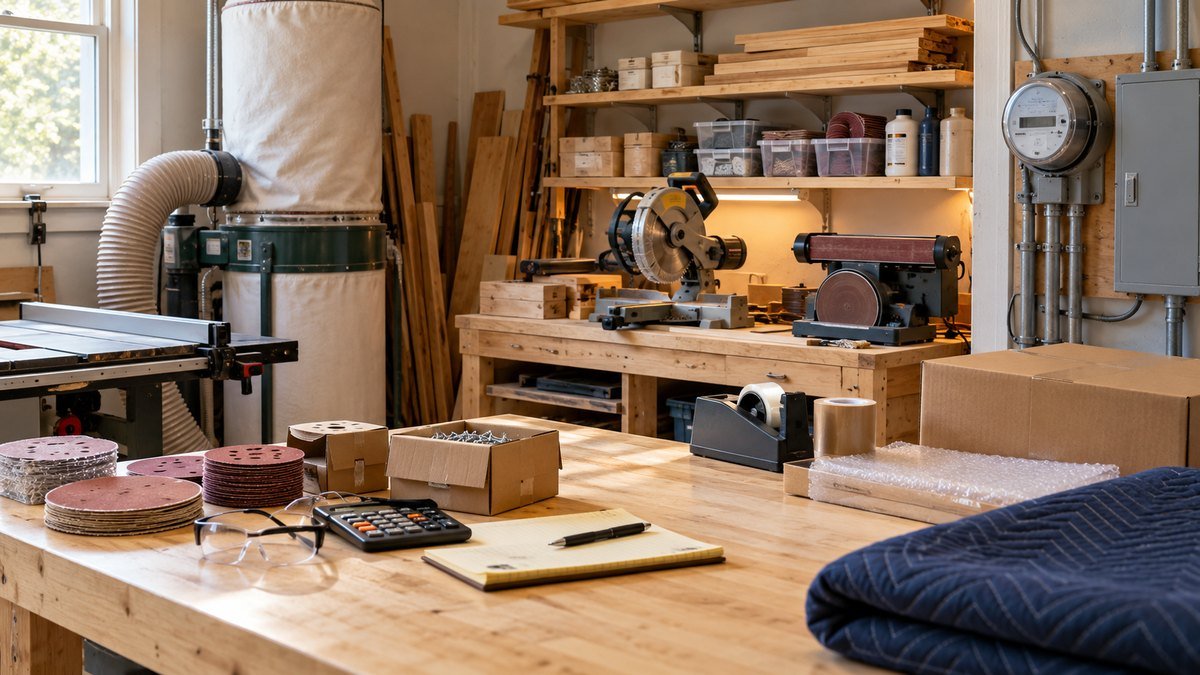
Overhead includes the costs that support your work but are not purchased for one specific table or cabinet. Common examples include workshop rent or a home-shop allocation, electricity, lighting, heating or cooling, tool maintenance, blade sharpening, dust collection, software, bookkeeping, insurance, and equipment replacement.
Allocate shop overhead consistently
Choose one method and use it consistently. You can calculate an hourly overhead rate by dividing expected monthly overhead by realistic monthly billable hours. Alternatively, use a percentage of direct costs if your projects are similar enough for that method to remain fair. The purpose is not perfect accounting; it is preventing recurring expenses from vanishing from every quote.
Keep a reserve for tool wear and replacement. A saw blade, sander, drill, and dust extractor support many projects, so charging the full purchase price to one customer would be unreasonable. Charging nothing is equally misleading. A modest overhead allocation spreads those costs across the work that uses them.
Account for fees, delivery, and customer service
Selling expenses may include marketplace commissions, card-processing fees, advertising, photography props, packaging, mileage, hired delivery help, and installation supplies. Some costs are fixed, while others are a percentage of the selling price. Percentage-based fees should be calculated carefully because increasing the price also increases the fee.
Custom work also brings communication and revision time. Define how many design revisions the quote includes, what delivery area is covered, and which changes require a new estimate. Clear boundaries protect both the maker and the customer.

How to Price Handmade Wood Furniture With a Complete Formula
A useful woodworking pricing formula separates the base cost from profit. One straightforward structure is:
Materials + Labor + Overhead + Selling Expenses = Total Cost
Total Cost + Profit = Selling Price
This structure makes it easier to see whether a lower quote comes from real efficiency or from removing your compensation. It also shows which assumptions need to change when a customer requests a different wood species, finish, size, or delivery arrangement.
Build the base price
Suppose a small console table requires $220 in purchased materials, including an allowance for waste and consumables. You estimate 18 active labor hours at $30 per hour, giving $540 in labor. Allocated overhead is $110, and expected selling and delivery expenses are $80. The total cost is $950 before profit.
If you simply sell for $950, the quote covers the assumptions but leaves no business profit for growth, unexpected problems, or the risk of a fixed-price commitment. Add profit deliberately rather than hoping some money remains at the end.
Check markup versus margin
Markup and profit margin are related but not identical. Markup compares profit with cost. Margin compares profit with the final selling price. If a project costs $950 and you add a 20% markup, the price becomes $1,140 and the profit is $190. That $190 is about 16.7% of the $1,140 selling price, not a 20% margin.
To calculate a target margin, use: Selling Price = Total Cost ÷ (1 – Target Margin). With a $950 cost and a 20% target margin, the calculation is $950 ÷ 0.80, producing a $1,187.50 price before any necessary rounding. This is why it helps to decide whether your goal is a markup or a margin before presenting the quote.
Accurate measurements support accurate estimates. A digital caliper can help confirm stock thickness, hardware dimensions, and small component sizes before you finalize the material list.
Adjust the Price for Complexity and Market Value
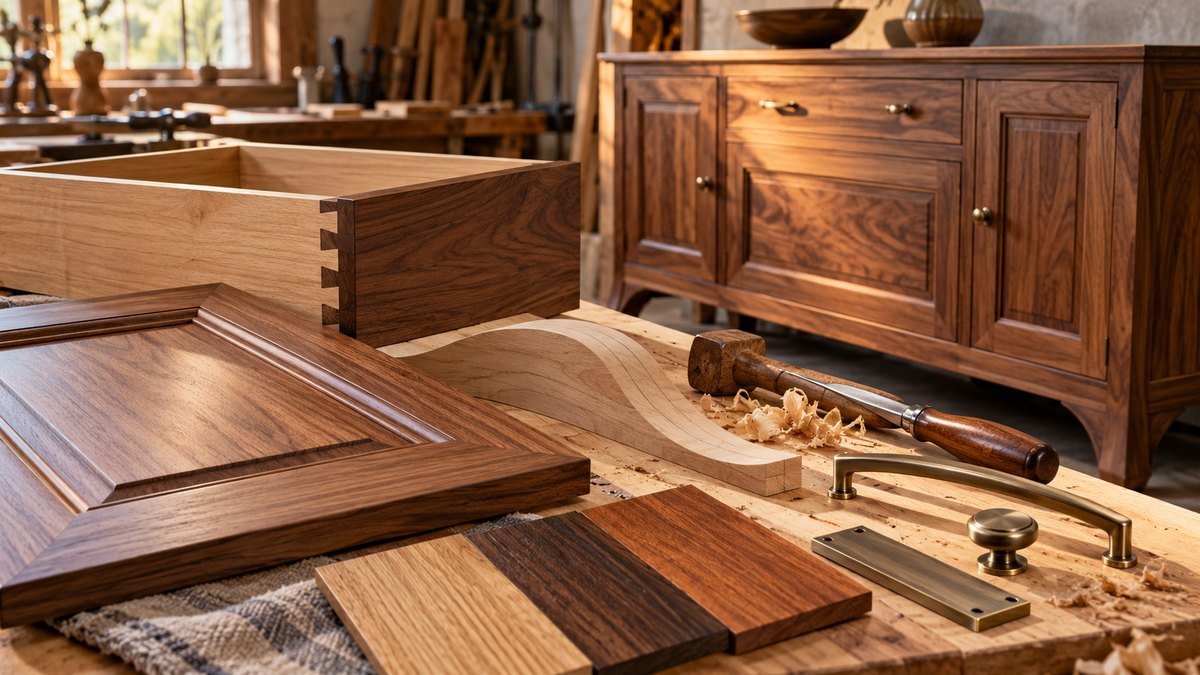
A formula gives you a defensible starting point, but it cannot describe every design risk. Two pieces with similar dimensions may require very different skill, tooling, finishing time, or installation effort. The final quote should reflect those differences without turning into an unexplained premium.
Price custom work and change requests
Custom dimensions, unusual joinery, grain matching, templates, prototypes, difficult finishes, and one-time jigs can add time and uncertainty. Estimate those tasks explicitly. If the design is not fully resolved, use a paid design phase or state the assumptions on which the quote depends.
A documented method for how to price handmade wood furniture also makes custom adjustments easier to explain. The customer can see which choices affect materials, labor, risk, and delivery instead of receiving an unexplained total.
Define a change-order process before work begins. A customer who changes the dimensions after materials are cut is not asking for a small edit; the request may create new material and labor costs. Written approval keeps the project scope and payment expectations clear.
Beginners who want structured examples of furniture construction can review the optional Furniture Craft Plans resource. Use any plan as a planning reference, then calculate your own material, labor, overhead, and selling costs rather than copying a suggested selling price.
Compare value without copying competitors
Market research is a reasonableness check, not a substitute for costing. Compare pieces with similar materials, construction, size, finish quality, customization, delivery, and customer service. A mass-produced item is not a useful direct comparison for a one-off hardwood commission.
If your calculated price is much higher than comparable work, examine the cause. Your process may be inefficient, the design may be too complex for the target customer, or the market may not support that combination. If the calculated price is much lower, check for missing labor, overhead, or risk before assuming you have found an advantage.
For product ideas and realistic build categories, see creative woodworking ideas you can build and sell. Use the examples to study demand and complexity, not as ready-made prices.
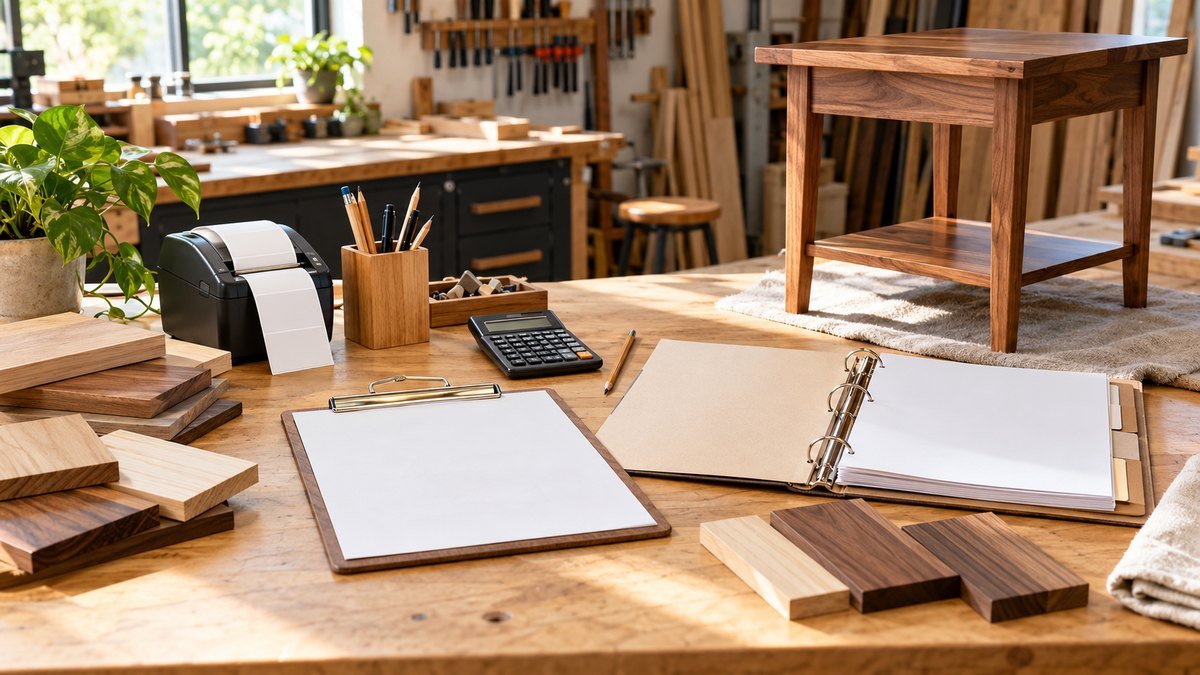
Create a Repeatable Quote and Review Process
The best way to improve how to price handmade wood furniture is to stop rebuilding the estimate from memory. A standard worksheet makes your assumptions visible and helps you compare the quote with the finished job.
Build a simple pricing worksheet
Create one row for each material, quantity, unit cost, waste allowance, and extended cost. Add separate sections for labor stages, overhead, selling expenses, and profit. Include notes for the wood species, finish, hardware, dimensions, delivery, installation, deposit, payment schedule, and quote expiration date.
A quote should describe what the customer receives and what is excluded. State whether delivery, installation, wall anchoring, stairs, or site preparation is included. Clarify that natural wood varies in color and grain. If the customer approves a sample, attach the approval to the project record.
The free Weekend DIY Project Checklist and Book Planner can help you organize project stages before estimating them. You can also use the Woodworking Project Planner to turn the scope into a practical build sequence.
If you sell ready-made pieces at markets, a compact thermal label printer may be useful for clear price tags, inventory codes, and package labels. Treat the printer and label rolls as business supplies in your overhead or selling-expense records.
Review actual costs after every build
When the project is complete, compare estimated and actual material quantities, labor hours, fees, and delivery costs. Note why each significant difference occurred. Perhaps the finish required an extra coat, the lumber had more defects than expected, or assembly became faster because a jig worked well.
Do not automatically charge the customer for an error that falls outside the agreed terms. Instead, use the result to improve future estimates. Over several projects, your records reveal which designs are profitable, which stages cause delays, and which minimum price makes small commissions worthwhile.

Frequently Asked Questions
What is a good profit margin for handmade wood furniture?
There is no universal margin that fits every maker, product, and sales channel. Your target must reflect risk, demand, competition, business goals, and how completely your cost estimate captures overhead. Start by calculating total cost accurately, choose a deliberate target, and review the result after each project. A sustainable margin leaves room for mistakes, growth, and slower periods without making the price impossible for the intended customer.
Should I charge for design time and customer revisions?
Yes, design and revision time are part of custom work. You can include a defined amount in the project estimate or charge a separate design fee. State how many revisions are included and when additional changes become billable. This keeps the quote clear and discourages unlimited redesign after materials, dimensions, or joinery decisions have already been approved.
How do I price reclaimed or customer-supplied wood?
Include the labor required to inspect, clean, de-nail, mill, and test reclaimed material. Customer-supplied wood may still create risk if it is wet, unstable, contaminated, or too small for the design. Write down who is responsible for replacement material and schedule changes if the supplied stock proves unusable. Free wood is not free when preparation and uncertainty add hours.
How should I price a one-off custom piece?
Estimate it as a unique project rather than spreading design and setup costs across an imaginary production run. Include consultation, drawings, templates, jigs, sourcing, sample work, and the uncertainty of an unfamiliar process. A deposit can cover early material and design commitments. Document the approved scope so later changes can be priced separately.
What costs do beginner furniture makers forget most often?
Common omissions include material waste, sandpaper, finish applicators, hardware shipping, design time, customer messages, tool wear, payment fees, packaging, mileage, delivery help, and final cleanup. Makers also confuse wages with profit. Labor pays for work performed; profit rewards the business for accepting risk and creates funds for future growth.
When should I raise my furniture prices?
Review prices when material or operating costs rise, your records show repeated overruns, demand consistently exceeds capacity, or your skill and finish quality improve. Raise prices based on evidence rather than embarrassment or guesswork. Update the worksheet, explain what the quote includes, and apply the new method consistently to future customers.

Conclusion
The practical answer to how to price handmade wood furniture is to make every cost visible before choosing the selling price. Count purchased materials and waste, pay for all active labor, allocate overhead, include selling expenses, and add profit with a formula you understand. Then compare the result with genuinely similar work and adjust only when the design, risk, service, or market position supports it.
Use a worksheet for your next project and write down every assumption. After delivery, compare the estimate with what actually happened. That single review habit turns pricing from a stressful guess into a system that improves with every build. Fair pricing protects your time, gives customers a clearer quote, and helps a woodworking hobby grow into sustainable work.
Affiliate Disclosure
Affiliate Disclosure: This post contains affiliate links. If you purchase through these links, DIY Wood Haven may earn a commission at no additional cost to you.




Ready to Build Smarter?